About HEAI 2026
Recent advances in Large Language Models (LLMs), Multimodal LLMs (MLLMs), Vision-Language-Action (VLA) models, and emerging world models have significantly advanced embodied AI, enabling agents to interpret natural language instructions and autonomously perform complex tasks such as navigation, object search, and manipulation. However, most existing approaches focus on task completion in controlled settings, rarely addressing unstructured, dynamic, and nuanced human-centric environments, where embodied agents must perceive, reason, and act, under uncertainty.
The Human-aware Embodied AI (HEAI) workshop promotes research toward the long-term vision of human–agent co-habitats
in the physical world. The first edition at IROS'25 in Hangzhou,
emphasized bi-directional communication (human-to-agent and agent-to-human) as a key mechanism to resolve uncertainty
and ambiguity throughout the robotic perception–reasoning–action cycle. Building on this foundation, this second edition
focuses on contextualized and collaborative embodied intelligence in human-centric environments. Beyond understanding
the geometric and semantic scenes, embodied agents must interpret personalized and situated contexts, adapting their actions
and interactions to users’ preferences, behaviors, and communication styles.
Motivated by real-world applications, e.g. elderly care, warehouses, industrial automation, the workshop highlights
challenges in methods and data towards personalized and physically-grounded reasoning, ensuring that agent actions are both
executable, effective and aligned with human expectations. In addition to promoting interactive embodied intelligence, the
workshop aims to advance personalized and contextualized scene understanding, action reasoning and planning, and scalable
approaches to creating datasets, benchmarks, and simulation environments featuring human-centric environments and interactions.



Schedule
Tentative schedule as follows:
| Time | Talk | Comments |
|---|---|---|
| 13:30 - 13:35 | Introduction | |
| 13:35 - 14:05 | Alessandra Sciutti (remote) | Embodied Cognition for Human-Aware Robotics (25 min + 5 min Q&A) |
| 14:05 - 14:35 | Xavier Alameda-Pineda (remote) | Beyond Task Completion: What a Real-World Social Robot Deployment in Elderly Care Teaches Us About Human-Centric Embodied AI (25 min + 5 min Q&A) |
| 14:35 - 15:05 | Unnat Jain | Astra/Fable vs. Your VLA: Who Should Do What (25 min + 5 min Q&A) |
| 15:05 - 15:15 | Best workshop paper award & presentation (10 mins) | |
| 15:15 - 15:55 | Poster session & Coffee break | |
| 15:55 - 16:25 | Chris Paxton | General Purpose Mobile Manipulation in Unstructured Environments (25 min + 5 min Q&A) |
| 16:25 - 16:55 | Tapomayukh Bhattacharjee | Physical Intelligence for Physical Care: Towards Stakeholder-Informed Caregiving Robots in the Real World? (25 min + 5 min Q&A) |
| 16:55 - 17:25 | Xuesu Xiao | Human-Interactive Mobile Robots: from Learning to Deployment (25 min + 5 min Q&A) |
| 17:25 - 17:30 | Closing | |
Call for Contributions
We call for papers covering relevant topics, including but not limited to:
- ▪ Collaborative Human-Agent interaction
- ▪ Multimodal Human-Agent interaction
- ▪ Interaction-enabled simulators / benchmarks
- ▪ Interaction personalization
- ▪ Interaction adaptation
- ▪ Uncertainty understanding
- ▪ Foundation models (VLM/VLAs)
- ▪ Human behaviour modeling
- ▪ Embodied reasoning
- ▪ Ethics & Safety
Submission Guidelines
We invite submissions of up to
4 pages (excluding references) of non-archival
papers using the official
template. Submissions previously published elsewhere are also welcome.
To submit a paper, please see the official
OpenReview page.
Important
Dates
-
📅 Submission opens:
31 July, 2026
-
⏳ Submission deadline:
31 Aug, 2026
-
✅ Acceptance notification:
21 Sept, 2026
-
🎉 Workshop day:
September 27th, 2026
Important Dates
- 📅 Submission opens: 31 July, 2026
- ⏳ Submission deadline: 31 Aug, 2026
- ✅ Acceptance notification: 21 Sept, 2026
- 🎉 Workshop day: September 27th, 2026
Organizing Committee
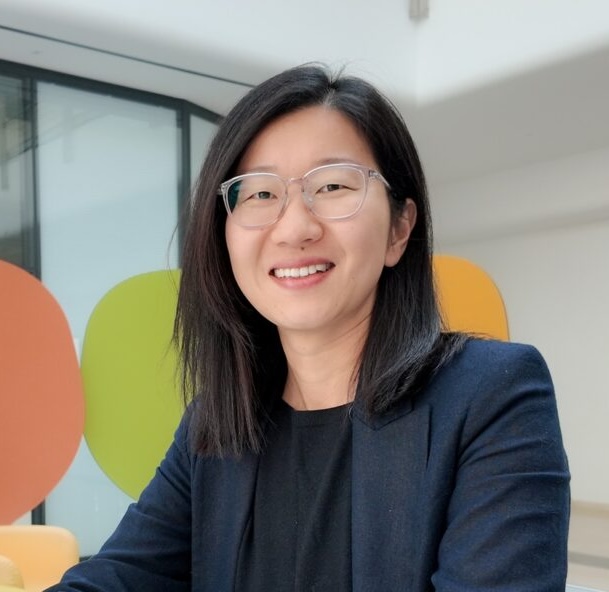
Yiming Wang

Yuwen Wang

Giseop Kim

Xinyuan Qian

Tommaso Campari

Angel X Chang

Alessandro Vinciarelli
Alessio Del Bue

Andrea Cavallaro
Sponsored by: